

Whether you’re designing your first clothing line, decorating your home, or sourcing textiles for your brand, understanding different fabric types is crucial. The right fabric choice can determine not only the aesthetics of your product but also its comfort, durability, and sustainability.
In this guide, we break down the most common fabric types, their characteristics, and ideal uses—helping you make confident, informed choices for any project.
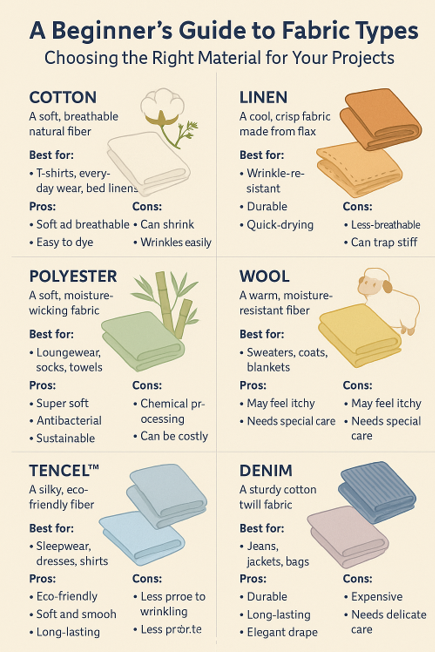
🧵 1. Cotton: The All-Purpose Natural Fabric
What it is:
Cotton is a soft, breathable fiber derived from the cotton plant. It’s one of the most widely used natural fabrics in the world.
Best for:
T-shirts, everyday wear, children’s clothing, bed linens, towels.
Pros:
- Soft and breathable
- Easy to dye and print
- Hypoallergenic
- Affordable
Cons:
- Can shrink if not pre-treated
- Wrinkles easily
- Conventional cotton has a high water footprint (opt for organic cotton when possible)
🌾 2. Linen: The Summer Classic
What it is:
Made from flax fibers, linen is known for its cool, crisp texture and natural luster.
Best for:
Summer clothing, tablecloths, curtains, bed sheets.
Pros:
- Very breathable
- Biodegradable
- Stronger than cotton
- Naturally pest-resistant
Cons:
- Prone to wrinkling
- Can feel stiff before first wash
🧶 3. Polyester: The Durable Synthetic
What it is:
A man-made fabric derived from petroleum. It’s widely used due to its durability and affordability.
Best for:
Outerwear, sportswear, bags, upholstery.
Pros:
- Wrinkle-resistant
- Durable and colorfast
- Dries quickly
- Resistant to mildew and shrinking
Cons:
- Non-biodegradable
- Can trap odors and moisture
- Less breathable
♻️ Tip: Choose recycled polyester (rPET) to reduce environmental impact.
🎋 4. Bamboo: Naturally Soft & Sustainable
What it is:
Made from the pulp of bamboo grass, bamboo fabric is usually processed into bamboo viscose or bamboo lyocell.
Best for:
Loungewear, socks, towels, eco-friendly fashion.
Pros:
- Super soft and smooth
- Antibacterial and hypoallergenic
- Moisture-wicking
- Sustainable (especially in closed-loop processing)
Cons:
- Some versions (bamboo viscose) involve harsh chemical processing
- Can be expensive
🐑 5. Wool: The Natural Insulator
What it is:
Derived from sheep (or alpacas, goats, and llamas), wool is a warm, moisture-resistant fiber.
Best for:
Sweaters, coats, blankets, winterwear.
Pros:
- Excellent insulation
- Moisture-wicking
- Long-lasting
- Naturally wrinkle-resistant
Cons:
- May feel itchy
- Needs special care (e.g., dry cleaning)
- Not vegan-friendly
♻️ Consider recycled wool for eco-friendly options.
🌿 6. TENCEL™ (Lyocell & Modal): The Silky Innovator
What it is:
Made from sustainably sourced wood pulp, TENCEL™ fibers are soft, breathable, and produced in a closed-loop system.
Best for:
Sleepwear, dresses, shirts, sustainable fashion.
Pros:
- Eco-friendly and biodegradable
- Extremely soft and smooth
- Moisture-wicking
- Less prone to wrinkling than cotton
Cons:
- Can be pricier than cotton
- May require gentle washing
🧥 7. Denim: Timeless and Tough
What it is:
A sturdy cotton twill fabric, often associated with jeans.
Best for:
Jeans, jackets, bags, workwear.
Pros:
- Durable and strong
- Long-lasting
- Iconic style appeal
Cons:
- Heavyweight
- May fade with washing
- High water usage in production (opt for organic or recycled denim)
🪡 8. Silk: The Luxurious Natural Fiber
What it is:
Produced by silkworms, silk is renowned for its smooth texture and elegant drape.
Best for:
Formal wear, lingerie, scarves, curtains.
Pros:
- Incredibly soft and glossy
- Lightweight and breathable
- Drapes beautifully
Cons:
- Expensive
- Requires delicate care
- Not vegan-friendly
🧵 How to Choose the Right Fabric
Here’s a quick decision guide:
Need | Best Fabric(s) |
Breathability | Cotton, Linen, TENCEL™ |
Durability | Polyester, Denim, Wool |
Eco-friendliness | Organic Cotton, Bamboo Lyocell, Hemp |
Luxury & softness | Silk, Bamboo, TENCEL™ |
Stretch/Activewear | Recycled Polyester, Spandex Blends |
Warmth | Wool, Fleece, Blended Fabrics |
🔍 Final Thoughts: Fabric Knowledge is Power
Whether you’re sourcing for fashion, upholstery, or industrial use, understanding the properties of each fabric will help you align your material choices with your project goals. From sustainability to performance, every thread counts.
At O2linkx, we help businesses around the world source and manufacture the right fabric—cost-effectively and sustainably. Explore our offerings or get in touch for tailored sourcing solutions.
Share this post: on Twitter on Facebook