

The textile industry is experiencing a seismic shift. As global consumers become more eco-conscious, fashion and fabric manufacturers are actively seeking out sustainable materials that minimize environmental impact. In 2025, these efforts are not just trends — they’re essential transformations. In this blog, we explore the top 10 sustainable fabrics that are revolutionizing the textile landscape, offering a greener future without compromising on quality or aesthetics.
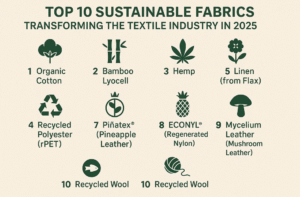
🌱 1. Organic Cotton
Why it matters: Unlike conventional cotton, organic cotton is grown without toxic pesticides, synthetic fertilizers, or genetically modified organisms (GMOs).
Benefits:
- Uses 91% less water
- Reduces soil and water contamination
- Hypoallergenic and breathable
Popular uses: T-shirts, underwear, baby clothes, and home textiles.
🎋 2. Bamboo Lyocell
Why it matters: Bamboo grows quickly and requires no fertilizers or pesticides. The closed-loop process used in making lyocell bamboo ensures minimal waste.
Benefits:
- Naturally antibacterial
- Highly absorbent and soft
- Biodegradable
Popular uses: Towels, bedding, activewear, and undergarments.
🍃 3. Hemp
Why it matters: Hemp is one of the oldest and most sustainable crops. It grows rapidly, improves soil health, and requires very little water.
Benefits:
- Stronger and more durable than cotton
- Naturally resistant to pests
- Carbon-negative (absorbs CO₂ from the atmosphere)
Popular uses: Denim, jackets, bags, and eco-friendly packaging.
♻️ 4. Recycled Polyester (rPET)
Why it matters: rPET is made by recycling plastic bottles and converting them into fabric — reducing plastic pollution and the demand for virgin petroleum-based polyester.
Benefits:
- Diverts waste from landfills
- Requires 59% less energy to produce than virgin polyester
- Durable and quick-drying
Popular uses: Outerwear, bags, sportswear, and home furnishings.
🌾 5. Linen (from Flax)
Why it matters: Flax is a resilient crop that can grow in poor soil and requires little water or energy to produce.
Benefits:
- Long-lasting and biodegradable
- Naturally pest-resistant
- Becomes softer with every wash
Popular uses: Summer clothing, curtains, tablecloths, and upholstery.
🌿 6. TENCEL™ (Lyocell and Modal)
Why it matters: Produced by Lenzing, TENCEL™ is derived from wood pulp using a closed-loop system that recycles 99% of water and solvents.
Benefits:
- Smooth and breathable
- Low ecological impact
- Biodegradable
Popular uses: Dresses, bed linens, activewear, and shirts.
🧶 7. Piñatex® (Pineapple Leather)
Why it matters: Piñatex® is made from the waste fibers of pineapple leaves — a byproduct of existing agriculture.
Benefits:
- Cruelty-free alternative to leather
- Durable and stylish
- Low environmental footprint
Popular uses: Shoes, bags, accessories, and upholstery.
🌊 8. ECONYL® (Regenerated Nylon)
Why it matters: Made from ocean and landfill waste like fishing nets, fabric scraps, and industrial plastic, ECONYL® helps clean the planet while creating high-quality fabric.
Benefits:
- Same quality as virgin nylon
- Infinitely recyclable
- Reduces global warming potential by 90%
Popular uses: Swimwear, leggings, lingerie, and carpets.
🍄 9. Mycelium Leather (Mushroom Leather)
Why it matters: Made from the root system of mushrooms (mycelium), this biodegradable leather alternative requires far less water and land to produce.
Benefits:
- Grows quickly in lab conditions
- Biodegradable and vegan
- Versatile and strong
Popular uses: Footwear, handbags, wallets, and luxury fashion.
♻️ 10. Recycled Wool
Why it matters: Instead of discarding pre- or post-consumer wool products, recycling wool reduces textile waste and conserves resources.
Benefits:
- Reduces landfill and water use
- Retains wool’s natural properties
- Reduces energy and dye usage
Popular uses: Sweaters, coats, and blankets.
🌏 Final Thoughts: A Greener Future Starts with Smarter Choices
2025 marks a critical year in sustainable textile evolution. These 10 eco-conscious fabrics are not only better for the planet but also provide innovation, quality, and style to modern apparel and home textile industries.
At O2linkx, we’re committed to offering smart textile solutions that meet global sustainability standards. Whether you’re a fashion brand, a buyer, or a conscious consumer — it’s time to think green.